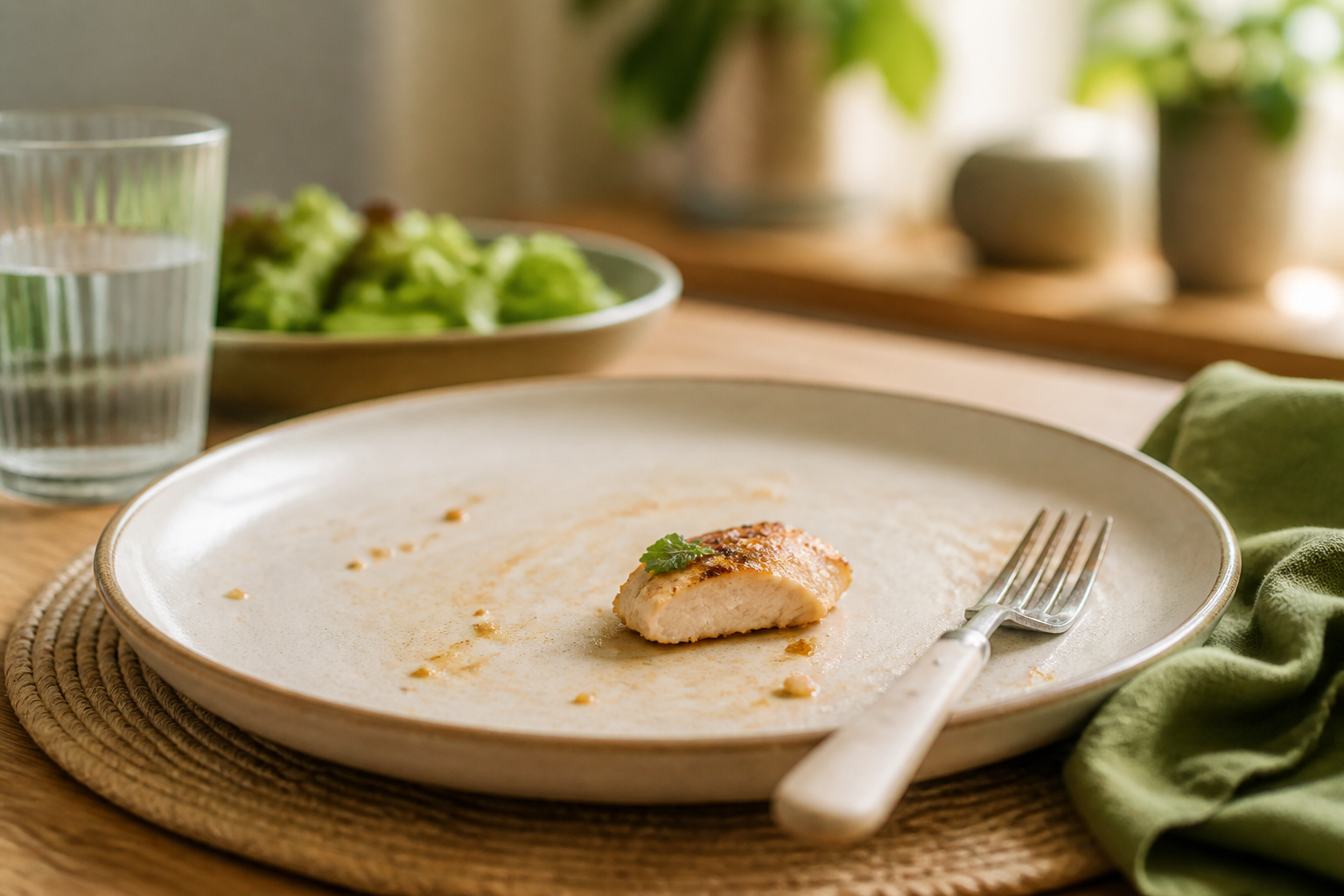
If you keep asking yourself why do I always leave one bite of food on my plate, you are not alone, and it is usually not a random quirk. That leftover bite often points to how your body signals fullness, how you were taught to finish meals, or a quiet habit that formed without much thought. Understanding the pattern matters more than forcing yourself to clean the plate or feel guilty about waste.
This post digs into the psychology behind that last bite. It complements our guide on the power of one bite and the last-bite rule, which focuses on using that bite as a tool. Here we start with curiosity: why the bite is still there in the first place.
A plain answer to why you leave one bite
Most people leave one bite for one of a few overlapping reasons. Your fullness cues may kick in a few minutes after you start eating, so you feel done before the plate looks empty. You may dislike the sensation of being stuffed, so stopping short feels safer. You might have learned, at home or in diet culture, that leaving food shows restraint. Or finishing everything once felt like a chore, and leaving a bite became your private compromise.
None of those reasons make you broken or wasteful by default. They are clues. When you treat the leftover bite as data instead of a character flaw, you can decide whether to keep the habit, reshape it, or use it intentionally.
Fullness has a delay, and your plate does not
Satiety is not instantaneous. Digestion and gut-brain signaling take time, so you can still feel hungry while food is already on the way to catching up. That lag is a big reason people either overshoot and feel uncomfortably full, or stop with a bite left once the signal finally lands.
If you eat quickly, scroll during meals, or eat in a rush between meetings, the delay gets louder. You may clean most of the plate on autopilot, then notice you are satisfied and leave the last bite without planning to. That is your body catching up, not a mysterious personality trait.
Practical ways to work with the delay:
- Pause halfway through a meal for 30 to 60 seconds and check hunger, not the plate.
- Slow the first few bites on purpose, especially with dense or rich foods.
- Serve slightly smaller portions when you often leave the same amount behind.
- Notice whether the leftover bite is cold leftovers you never liked, or food you enjoyed but no longer need.
If leftover bites show up mostly when you are distracted, boredom can be part of the picture too. Our guide on how to stop boredom eating walks through that pattern in more detail.
Completion habits and the “almost finished” feeling
Some of us are completion people. We like closed loops: inbox zero, finished chapters, empty plates. Leaving one bite can feel like an unfinished task, which is why other people find the habit irritating even when they do it themselves.
Oddly, leaving exactly one bite can also be a completion habit in reverse. The plate looks “done enough.” You proved you ate. You also proved you did not need every crumb. That tiny leftover becomes a ritual endpoint, similar to putting a period at the end of a sentence.
Ask yourself:
- Do I feel tense if the plate is completely empty?
- Do I feel tense if more than a bite remains?
- Does the leftover bite feel like control, relief, waste, or nothing at all?
Your answer tells you whether this is about fullness, identity, childhood rules, or something closer to emotional regulation around food.
Childhood rules, clean plates, and quiet rebellion
Many adults still eat under old household scripts. “Finish everything.” “Think of kids who have less.” “Do not waste food.” Those messages can create pressure to override fullness. Leaving one bite can become a soft rebellion: you are not throwing away the meal, but you are also not finishing against your body’s wishes.
The flip side exists too. Some people were praised for leaving food, or learned that thinness and restraint were linked. For them, the last bite is a performance of “I am good,” even when they are still hungry.
Neither script is automatically healthy. A clean plate can mean true satisfaction. A leftover bite can mean wise stopping. The same behaviors can also mean anxiety, people-pleasing, or diet rules that no longer fit your life. The goal is choice, not a new rigid rule.
If holiday meals or family dinners still trigger arguments about finishing food, it helps to prepare a short line you believe. Something simple works: “I’m full, and I’m going to stop here.” You do not owe a debate about gratitude every time your fork goes down. Boundaries around food are allowed even when the people at the table love you.
Culture, restaurants, and Texas-sized portions
Portion norms shape what “one bite left” even means. Restaurant plates in many U.S. cities, including busy Texas dining spots, are often larger than a single appetite needs. Leaving a bite, or a third of the plate, can simply mean the serving was sized for a different era of appetite or a different body than yours today.
At home, family-style bowls and refill habits can blur the endpoint of a meal. If you always leave the same symbolic bite, you may be creating an endpoint the plate itself does not give you. That can be useful. It can also hide that you are still eating past comfortable fullness most of the meal and only stopping at the curtain call.
A helpful check: weigh or portion a few typical dinners for a week without changing anything else. If you consistently leave food, your default scoop may be larger than your current needs. Adjusting the scoop is often kinder than negotiating with guilt at the end of every meal.
When the last-bite rule helps, and when it backfires
The intentional last-bite rule is different from accidentally leaving food. Used well, it teaches you to stop while food still tastes good, instead of chasing every last swallow into discomfort. That is the approach in our one-bite pillar: leave a bite on purpose as practice for listening to satisfaction.
It backfires when:
- You leave the bite but still feel unsatisfied and raid the pantry later.
- The leftover becomes a moral scorecard (“I was good because I left food”).
- You use it to restrict below what your body needs across the day.
- You feel shame every time someone clears your plate for you.
If leaving food is tangled up with stress, secrecy, or swings between restriction and overeating, look at the wider pattern. Our article on why emotional eating keeps going and what actually helps can be a better next step than fine-tuning plate leftovers.
Is leaving one bite related to ADHD or “picky” eating?
Search results sometimes connect leftover bites to attention differences, sensory preferences, or eating quirks. Some people with ADHD-like attention patterns notice appetite late, eat irregularly, or lose interest mid-meal when something else grabs focus. Sensory-sensitive eaters may reject textures once food cools or changes mouthfeel on the last bites.
That does not mean a leftover bite diagnoses anything. It means context matters. If you also struggle with meal structure, forgetting to eat, or strong texture aversions, talk with a clinician or registered dietitian who understands both nutrition and behavior. Do not self-label from a plate photo.
The same caution applies to “picky eating” labels in adulthood. Preference is not pathology. What deserves attention is distress: skipping meals because textures feel unsafe, hiding leftovers out of shame, or swinging between rigid rules and chaotic eating. Those patterns benefit from care, not from internet quizzes.
What to do with the habit if you want change
You do not have to eliminate leftover bites to improve your relationship with food. You can make the habit more intentional.
- Name the reason for a week. After meals, jot one word: full, bored, waste-guilt, restraint, taste-off, portion-too-big.
- Separate waste from fullness. Leftovers for tomorrow are different from leaving food you will throw away. Plan storage when portions run large.
- Practice stopping earlier, not only at the last bite. If you only notice fullness at the final forkful, you are negotiating late.
- Use the last-bite rule on purpose some days. On other days, finish if you are still hungry. Flexibility beats a new perfection rule.
- Get support if food rules feel loud. Classes and counseling help when habits are tied to emotion, family conflict, or long dieting history.
For many patients, the leftover bite is a doorway into deeper eating patterns. That is where structured support helps more than another tip list. Small experiments beat overnight overhauls. Change one meal first, then another, and notice what feels sustainable when nobody is watching.
How psychology of eating support fits
If you recognize yourself in clean-plate pressure, “good eater” identity, or stopping for reasons that have little to do with hunger, skill-building beats willpower. Vitality’s psychology of eating classes focus on triggers, habits, and practical tools you can use at real meals, including the messy ones after long Texas workdays.
Virtual options make it easier to join when travel or schedules are tight. Pairing behavior support with nutritional counseling or a broader weight loss program can help when plate habits sit inside a larger weight or health goal.
Ready to understand your eating patterns with a team
Leaving one bite of food is rarely just about manners or waste. It is often your body, your history, and your habits talking at the same time. If you want help sorting which of those is loudest for you, our team can walk through real meals, real stress, and realistic next steps without shame.
Book a visit when you are ready to turn that leftover bite from a confusing quirk into useful information.
Leaving food on your plate: questions people ask
These answers cover common worries about leftover bites, waste, fullness, and when a habit needs more than a tip. They are educational, not personal medical advice.
Is leaving one bite of food on my plate a bad habit?
Not automatically. Leaving one bite can mean you noticed fullness before discomfort, or that the portion was larger than you needed. It becomes a problem when it is tied to shame, rigid diet rules, or swinging between restriction and overeating later. Look at how you feel after the meal and what you do next, not only what remains on the plate. If the leftover bite helps you stop calmly, it can be a useful cue. If it feels like a performance of being “good,” it may be worth unpacking with support.
Why do I leave food even when I still feel hungry?
That mismatch often points to rules overriding body cues. Old clean-plate rebellion, fear of finishing, or a belief that leaving food equals control can stop you before you are satisfied. Distraction can also confuse the signal, so you pause for reasons that are not true fullness. Try pausing midway through meals and rating hunger on a simple 1 to 10 scale. If you regularly leave bites while still below comfortable satisfaction, practice finishing when hungry and saving leftovers only when you are truly done. A dietitian or psychology-of-eating class can help rebuild trust in appetite.
Does the last-bite rule mean I should always leave food?
No. The intentional last-bite rule is a practice tool, not a lifelong commandment. Some meals you will leave a bite because satisfaction arrived early. Other meals you will finish because you are still hungry, active, or recovering. Flexibility is the point. Using the rule every time as a moral scorecard usually recreates diet rigidity. Treat it as training wheels for listening to taste and fullness, then graduate to whatever stopping point fits that meal.
Is wasting food wrong if I leave bites behind?
Food waste is a fair concern, and guilt is not a great long-term regulator. Better options include serving smaller first portions, packing leftovers you will actually eat, and sharing restaurant meals when plates run large. Leaving a bite you will throw away every night is a signal to adjust portions earlier, not a reason to override fullness until you feel sick. Respect for food and respect for your body can coexist when planning happens before the plate is already overloaded.
Could leaving one bite be related to emotional eating?
Sometimes. People use leftovers as proof they were restrained after a stressful day, or they stop early then snack later when emotions spike. The leftover itself is not the diagnosis. Watch the pattern around it: secrecy, all-or-nothing thinking, or eating when lonely or bored. If those show up, address the emotional loop directly instead of micromanaging the final forkful. Resources on boredom eating and emotional eating, plus structured classes, usually help more than a new plate rule.
When should I talk to a professional about this habit?
Reach out if leftover bites are tied to anxiety, family conflict, binge-restrict cycles, or distress that spills into daily life. Also get help if texture aversions, skipped meals, or chaotic appetite are part of the picture. Educational content is not personal medical advice. A medically supervised weight loss team, registered dietitian, or psychology-of-eating support can sort what is habit, what is fullness, and what needs deeper care. Texas patients can often start with an in-person or virtual appointment.