
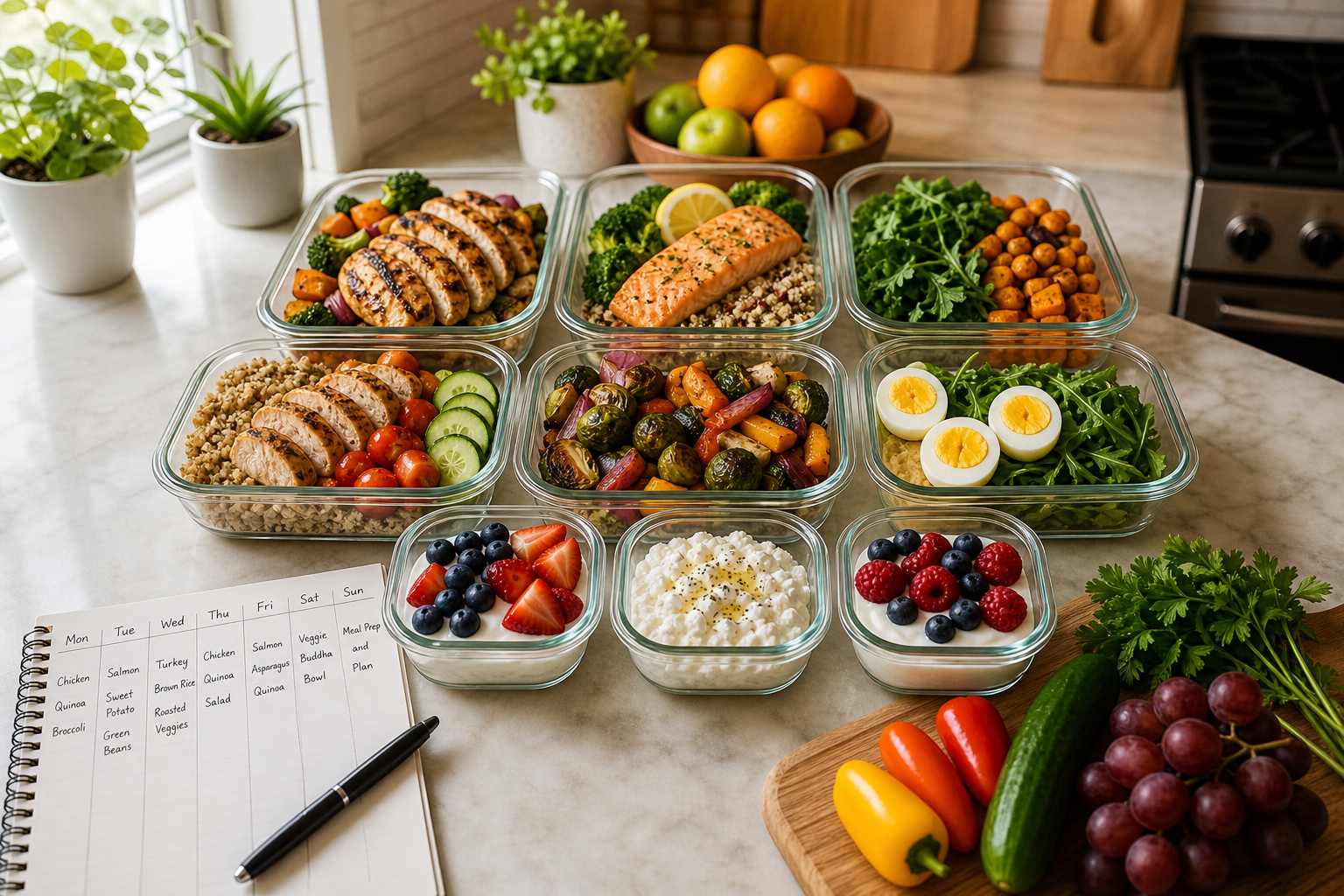
A weekly meal plan for weight loss is easier to follow when you can see exactly what a day looks like, so here is a sample Monday to start. Breakfast is Greek yogurt with berries and chia (about 25g protein). Lunch is a grilled chicken and quinoa bowl (about 35g protein). Dinner is baked salmon with roasted vegetables (about 30g protein). Your snack is cottage cheese with cucumber (about 15g protein). That is roughly 105g of protein spread across the day, which helps you feel full and hold onto muscle while you lose fat. If you want portions matched to your body, our nutritional counseling team can adjust any day below.
The plan that follows is a realistic seven-day template, not a crash diet. Every meal leads with protein and fiber, portions stay flexible, and nothing here promises a specific number on the scale. Use it as a starting framework, then tweak it to your schedule, your budget, and your taste.
Sample Monday at a glance
If you only skim one section, make it this one. Here is the full Monday, meal by meal, with a protein estimate for each.
- Breakfast: Greek yogurt with berries, chia seeds, and a few chopped walnuts (about 25g protein)
- Lunch: Grilled chicken over quinoa with mixed greens, tomato, and olive oil (about 35g protein)
- Dinner: Baked salmon with roasted broccoli and sweet potato (about 30g protein)
- Snack: Cottage cheese with sliced cucumber and pepper (about 15g protein)
Daily total lands near 105g of protein and plenty of fiber from vegetables, fruit, and whole grains. That combination is what keeps most people satisfied between meals, which is the quiet secret behind sticking to any plan.
Your 7-day weekly meal plan for weight loss
Each day gives you a breakfast, lunch, dinner, and one snack, with a protein estimate at every meal. Aim for roughly 90g to 120g of protein per day for most adults, along with vegetables or fruit at nearly every meal. Prep notes below the table show how to build most of this in two short cooking sessions.
| Day | Breakfast | Lunch | Dinner | Snack |
|---|---|---|---|---|
| Monday | Greek yogurt, berries, chia (25g) | Grilled chicken quinoa bowl (35g) | Baked salmon, broccoli, sweet potato (30g) | Cottage cheese and cucumber (15g) |
| Tuesday | Veggie egg scramble, whole-grain toast (22g) | Turkey and avocado wrap, side salad (30g) | Lean beef stir-fry with brown rice (32g) | Apple with peanut butter (8g) |
| Wednesday | Overnight oats with protein powder (28g) | Chicken and chickpea salad (34g) | Baked cod, roasted asparagus, quinoa (30g) | Handful of almonds (6g) |
| Thursday | Cottage cheese, pineapple, sunflower seeds (24g) | Leftover beef stir-fry bowl (30g) | Turkey chili with beans and peppers (33g) | Edamame (11g) |
| Friday | Two-egg omelet with spinach and feta (20g) | Tuna and white bean salad (32g) | Grilled shrimp tacos, cabbage slaw (28g) | Greek yogurt with cinnamon (15g) |
| Saturday | Protein smoothie, banana, spinach (30g) | Chicken and veggie soup, whole-grain roll (28g) | Baked chicken thighs, roasted carrots, farro (34g) | Hummus with bell peppers (6g) |
| Sunday | Scrambled tofu with vegetables (22g) | Salmon and quinoa buddha bowl (32g) | Lean pork tenderloin, green beans, potato (33g) | Cottage cheese and berries (15g) |
Prep notes:
- Cook once, eat twice: Tuesday dinner (beef stir-fry) becomes Thursday lunch. Wednesday quinoa doubles for Sunday. This is how a full week stays under two real cooking sessions.
- Batch proteins first: Grill or bake chicken, salmon, and cod on your prep day. Store in glass containers so you can build bowls fast.
- Wash and chop vegetables in advance: Pre-cut broccoli, peppers, cucumber, and greens so a healthy plate takes minutes on a busy night.
- Keep snacks portioned: Divide nuts, hummus, and yogurt into single servings so grabbing one is easy and mindless overeating is harder.
Why protein anchors every meal
Protein does two useful things at once when you are trying to lose weight. It keeps you full longer than carbohydrates or fat alone, and it helps protect lean muscle so more of the weight you lose comes from fat. The 2020 to 2025 Dietary Guidelines for Americans recommend that adults get protein at each meal rather than loading it all into dinner, which is exactly how the plan above is built.
A simple target is 20g to 35g of protein per meal. That might look like three or four eggs, a palm-sized piece of chicken or fish, a cup of Greek yogurt, or a scoop of protein powder blended into oats or a smoothie. Pair that protein with fiber from vegetables, fruit, beans, or whole grains, and most people find their hunger settles down without counting every calorie.
How much should you actually eat?
Portions matter more than perfect food choices, and they are personal. A very active 6-foot adult needs far more food than someone who is shorter or less active, so treat the amounts above as a middle-of-the-road starting point. A practical plate looks like this: half vegetables or fruit, a quarter protein, and a quarter whole grains or starchy vegetables, with a thumb of healthy fat like olive oil, avocado, or nuts.
You do not need to weigh every gram. Watch your energy, hunger, and how your clothes fit over a few weeks, then adjust up or down. If progress stalls or you feel drained, that is a signal to change portions, not to skip meals. This plan avoids very low calorie extremes on purpose, because under-eating tends to backfire with rebound hunger.
Batch prep that fits a busy DFW week
Most people quit a plan because of time, not willpower. If your week runs on Dallas or Fort Worth traffic and back-to-back commitments, build the whole thing around one or two prep sessions. Sunday afternoon and a quick Wednesday reset work well. Cook proteins and grains in bulk, roast a sheet pan of vegetables, and portion snacks into grab-and-go containers.
Every item on this plan uses grocery-store staples you can find across North Texas, so you are not hunting for specialty products. Frozen vegetables, canned beans, rotisserie chicken, and pre-washed greens are all fair game when time is tight. A slightly simpler plan you actually follow beats a perfect plan you abandon by Wednesday.
Easy swaps for common allergies and preferences
No single plan fits everyone, so here is a swap list you can use to keep the structure while changing the specifics. The goal stays the same: protein plus fiber at every meal.
- Dairy-free: Replace Greek yogurt and cottage cheese with a soy or pea-protein yogurt, tofu, or an extra serving of eggs, fish, or poultry.
- Gluten-free: Swap whole-grain toast, wraps, and farro for quinoa, brown rice, corn tortillas, or certified gluten-free oats.
- Nut-free: Trade almonds, walnuts, and peanut butter for sunflower seeds, pumpkin seeds, roasted chickpeas, or seed butter.
- Vegetarian: Build meals around eggs, Greek yogurt, tofu, tempeh, beans, lentils, and edamame in place of meat and fish.
- Shellfish or fish allergy: Replace salmon, cod, shrimp, and tuna with chicken, turkey, lean beef, or a plant protein.
- Lower budget: Lean on eggs, canned tuna, beans, frozen vegetables, oats, and whole chickens, which stretch protein for less.
How this plan fits meal-planning principles
A sample week is a helpful shortcut, but understanding the why makes it stick. If you want the fundamentals behind these choices, our guide to proper meal planning for weight loss walks through calorie balance, plate building, and habits that last. This weekly plan is simply those principles turned into seven ready-to-cook days.
If you prefer a more structured pattern, the 30-30-30 meal plan pairs a set protein target at breakfast with early movement, and it can slot right into the framework here. There is no single correct method. The best plan is the one that matches your routine and that you can repeat without feeling deprived.
When to work with a dietitian
A template gets you moving, but a professional makes it personal. A registered dietitian can adjust portions for your health history, medications, activity level, and any conditions like diabetes or high blood pressure. If you are unsure who to see, our comparison of a registered dietitian versus a nutritionist explains the difference in training and what each can offer.
At Vitality Weight Loss Institute, we see patients in person across Texas and virtually statewide, so a busy schedule is not a barrier. Our team can take a plan like this one and shape it around your grocery budget, your family, and your goals. This article is educational and is not a substitute for personal medical advice, so please talk with a qualified provider before making big changes.
Ready to make this plan yours?
A weekly meal plan works best when the portions, foods, and timing actually fit your life. If you have tried template diets before and they never stuck, a short conversation with a dietitian can turn this framework into something you look forward to.
Our nutrition team will review your goals, your schedule, and your food preferences, then build a realistic plan you can follow without guesswork. In person or virtual, we meet you where you are.
Weekly meal plan questions
Here are the questions patients ask most often when they start a weekly meal plan for weight loss. If your situation is more specific, our dietitians are happy to help you sort it out.
How many calories should a weekly meal plan for weight loss have?
There is no single number that fits everyone. Calorie needs depend on your age, height, weight, activity level, and health history, so a plan that helps one person lose weight may be too low or too high for another. Rather than chasing an exact figure, most people do well starting with balanced plates, protein at each meal, and honest portions, then adjusting based on energy and results over a few weeks. Very low calorie diets tend to backfire with rebound hunger and lost muscle. A registered dietitian can calculate a target that fits your body and keeps the plan sustainable.
How much protein should I eat at each meal?
A practical range is 20g to 35g of protein per meal for most adults, which usually adds up to somewhere between 90g and 120g per day. That looks like a palm-sized piece of chicken or fish, three or four eggs, a cup of Greek yogurt, or a scoop of protein powder in oats or a smoothie. Spreading protein across breakfast, lunch, dinner, and a snack helps you feel full and protects lean muscle while you lose fat. If you are very active, older, or managing a health condition, your ideal amount may differ, so it is worth confirming with a professional.
Can I meal prep this whole week in advance?
Yes, and doing so is one of the best ways to stick with any plan. Most of this week can be built in one main prep session plus a short mid-week reset. Batch-cook your proteins and grains, roast a sheet pan of vegetables, and portion snacks into single servings. Store cooked food in the refrigerator for three to four days and freeze anything you will not eat by then. Planning a couple of overlaps, like turning one dinner into the next day’s lunch, keeps your total cooking time low. Prepped food removes the daily decision that often leads to takeout.
What if I have food allergies or follow a special diet?
The structure of this plan matters more than the exact foods, so you can swap freely. For dairy-free eating, use soy or pea-protein yogurt, tofu, or extra eggs and lean meats. For gluten-free, choose quinoa, brown rice, corn tortillas, and certified gluten-free oats. Nut allergies swap easily to seeds and seed butter. Vegetarians can build meals around eggs, tofu, tempeh, beans, lentils, and edamame. The goal at every meal stays the same: a solid protein source plus fiber from vegetables, fruit, or whole grains. A dietitian can help you personalize swaps safely if you manage multiple restrictions.
Do I need to eat exactly these meals to lose weight?
No. This is a flexible template, not a strict prescription. The meals are examples that show a useful pattern: protein and fiber at each meal, reasonable portions, and no severe restriction. You can repeat your favorite days, rotate in new recipes, or scale portions to your appetite. What matters is consistency over time, not perfection on any single day. If you eat off-plan for a meal, simply return to the pattern at the next one. Weight loss comes from the overall habits you keep week after week, not from any one flawless menu.
How is this different from the 30-30-30 meal plan?
Both plans lean on protein, but they are structured differently. The 30-30-30 approach pairs 30g of protein within 30 minutes of waking with 30 minutes of low-intensity movement, focusing heavily on how you start the day. This weekly plan spreads protein and fiber evenly across breakfast, lunch, dinner, and a snack for the full seven days. They are compatible, so you can use the 30-30-30 breakfast rule inside this weekly framework if you like. Choose the structure that fits your morning routine and feels realistic to repeat. Our team can help you decide which pattern suits you best.
Can a dietitian personalize this plan for me?
Yes, and that is often the difference between a plan that fizzles and one that lasts. A registered dietitian can adjust portions and food choices for your health history, medications, budget, and schedule, and account for conditions like diabetes, high blood pressure, or digestive issues. At Vitality Weight Loss Institute we work with patients in person across Texas and virtually statewide, so you can get support in the office or by video call, whichever fits your week. Bring this template to your visit and we will shape it into a plan built around your real life rather than a generic menu.