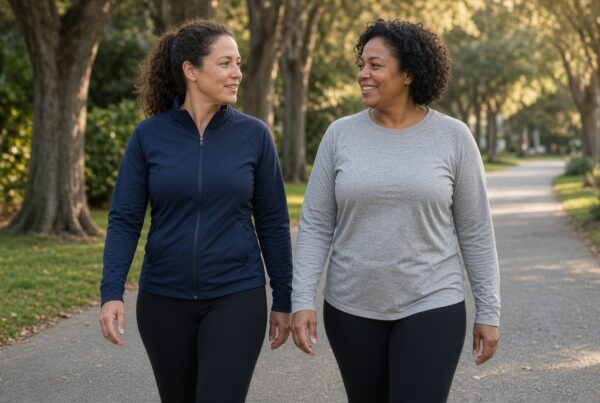

The best exercises for seniors to lose weight are the ones your knees, hips, and heart can repeat next month, not just today. After 60, joint stiffness, balance changes, and years of sedentary work make generic gym lists feel risky. You do not need burpees or sprint intervals. You need low-impact movement that burns calories, protects muscle, and fits a Texas summer without landing you in the ER.
This guide lists seven joint-friendly exercises with sets, reps, and progression notes. It links to our broader guide to weight loss for seniors for nutrition and medical context. It is not a HIIT cardio article. If you want heart-rate comparisons between walking and intervals, read our post on best cardio for weight loss. Here the focus is safe strength and daily movement for adults 60 and up.
Why exercise still matters after 60
Weight loss after 60 is harder for a few honest reasons. Muscle mass drops with age unless you fight back. A smaller muscle base means a lower resting metabolism. Hormone shifts, medications, and sleep changes can nudge appetite up while energy drifts down. Exercise does not erase those facts, but it tilts the scale in your favor.
Movement burns calories during the session and helps preserve lean tissue so more of what you lose is fat, not muscle you need for balance and independence. Regular activity also supports blood sugar control, mood, and sleep. Those side benefits matter when stress or poor rest triggers extra snacking.
The CDC recommends adults 65 and older get at least 150 minutes of moderate activity per week plus two days of muscle-strengthening work. Many seniors fall short not from laziness but from fear of injury. The exercises below are chosen to lower that fear while still moving the needle on fitness and weight.
Clear exercise with your care team first
Before you start a new routine, talk with your doctor or clinician if you have heart disease, uncontrolled blood pressure, diabetes complications, recent joint replacement, osteoporosis with fracture risk, balance disorders, or chest pain with activity. This article is educational, not personal medical advice.
A medically supervised weight loss program can match exercise volume to your chart, medications, and realistic week. That matters if you take drugs that affect heart rate, blood sugar, or fluid balance. The goal is sustainable fat loss and better function, not proving you can still do what you did at 35.
Seven best exercises for seniors to lose weight safely
Start with exercises 1 and 2 if you have been mostly sedentary. Add strength work (3 through 6) two or three days per week on non-consecutive days. Use exercise 7 for balance and recovery. Stop any movement that causes sharp joint pain, dizziness, or chest pressure.
- Brisk walking: 20 to 30 minutes, 5 days per week, at a pace where you can talk in short sentences. Joint caution: wear supportive shoes; shorten stride on hills. Progression: add 5 minutes every two weeks, or add light hand weights once walking feels easy. Texas tip: walk before 8 a.m. or after 7 p.m. in summer; use indoor malls, treadmills, or a walking track when heat index is high.
- Chair squats (sit-to-stand): 2 sets of 8 to 12 reps, 2 to 3 days per week. Stand in front of a sturdy chair, lower until you lightly touch the seat, then stand without plopping down. Joint caution: keep knees tracking over toes; use armrests lightly if needed. Progression: pause one second at the bottom, then hold a light dumbbell at chest height.
- Resistance band rows: 2 sets of 10 to 15 reps per arm, 2 to 3 days per week. Anchor a band at chest height, pull elbows back, squeeze shoulder blades. Joint caution: choose a light band first; avoid jerking. Progression: step back for more tension or slow the return phase to 3 seconds.
- Wall push-ups: 2 sets of 8 to 12 reps, 2 to 3 days per week. Hands on wall at shoulder height, body straight, lower chest toward wall, push back. Joint caution: wrists sore? Use fists or push from a counter edge. Progression: step feet farther from wall for more load.
- Heel raises (calf raises): 2 sets of 12 to 15 reps, 2 days per week. Hold a counter for balance, rise onto toes, lower slowly. Joint caution: skip if Achilles is inflamed. Progression: single-leg raises holding the counter.
- Seated or supported marches: 2 sets of 20 alternating knee lifts, 3 days per week. Sit tall or hold a counter, lift knees without rounding the back. Joint caution: reduce height if hip flexors pinch. Progression: add light ankle weights or march longer during TV commercials.
- Gentle tai chi or balance practice: 10 to 15 minutes, 3 days per week. Follow a beginner video or class focused on weight shifts and slow steps. Joint caution: practice near a wall or sturdy chair. Progression: reduce hand support as confidence grows.
Walking handles most of your calorie burn. The strength moves keep muscle on your frame so daily tasks stay easier. Together they support weight loss better than either alone.
Walking: still the foundation
Walking is the most underrated fat-loss tool for older adults. It is low impact, free, and easy to split into ten-minute chunks. Our article on why walking 10,000 steps might beat the gym explains how daily steps stack up against occasional hard workouts.
For seniors, consistency beats intensity. A 25-minute brisk walk five days a week often outperforms one exhausting hike you skip for three weeks. Track steps if it motivates you, but do not obsess over a magic number. Any increase from your current baseline helps.
Strength training without the gym intimidation
Muscle is metabolically active tissue. Losing it while dieting makes the scale drop, but function drops too. Chair squats, bands, and wall push-ups build strength without barbells or loud weight rooms.
Two or three short strength sessions per week are enough for most beginners. Rest at least one day between sessions targeting the same muscles. Mild muscle soreness the day after is normal. Sharp joint pain is not. Swap the exercise or reduce range of motion and ask your care team if pain persists.
How this differs from high-intensity cardio
HIIT and hard running have a place for some younger adults. After 60, recovery takes longer and joint tolerance often shrinks. Our cardio guide compares walking, steady-state, and HIIT for general fat loss. For seniors, the safer default is walking plus controlled strength work, not repeated sprint intervals.
If you already walk daily and feel strong, one moderate cycling or swimming session per week can add variety without beating up your knees. Keep hard intervals as an optional upgrade only after months of pain-free basics, and only with medical clearance.
Sample weekly schedule (beginner-friendly)
Use this as a template, not a rigid rule. Adjust days to your energy and weather.
- Monday: 20-minute morning walk; chair squats 2 x 10
- Tuesday: 20-minute walk; resistance band rows 2 x 12
- Wednesday: Rest or 10-minute balance practice
- Thursday: 25-minute walk; wall push-ups 2 x 10
- Friday: 20-minute walk; heel raises and seated marches
- Saturday: Longer easy walk or indoor mall loop
- Sunday: Rest, gentle stretching, plan the week ahead
Total movement lands near 150 minutes without one heroic session you dread. Add minutes slowly. If you miss a day, resume the next. Guilt-driven overtraining causes more setbacks than a skipped walk.
Texas heat and indoor options
DFW and much of Texas see dangerous heat from June through September. Outdoor midday walks risk dehydration, dizziness, and skipped workouts. Plan outdoor movement for early morning or after sunset. Carry water. Wear light colors and a brimmed hat.
When the heat index is brutal, move indoors: treadmill, stationary bike, mall walking loops, community center tracks, or seated exercise classes at a local gym or senior center. Air-conditioned movement still counts. A canceled outdoor walk should become an indoor lap session, not a zero-activity day.
Progression without injury
Progress one variable at a time: more minutes, slightly faster pace, one extra set, or a bit more band tension. Do not change all four in the same week. Wait until an exercise feels easy for two consecutive sessions before leveling up.
Weigh yourself weekly at most, and pair the scale with how your clothes fit and how stairs feel. Energy and balance improvements often show up before the number moves. If weight stalls for several weeks, nutrition and sleep deserve attention, not automatically more exercise.
When a personalized exercise plan helps
Generic lists assume healthy joints and no medication interactions. If you have arthritis flares, prior falls, neuropathy, or you are starting GLP-1 medications that change appetite and energy, a tailored plan reduces guesswork.
Vitality offers in-person and virtual care across Texas. Our exercise counseling fits movement to your body instead of copying a twenty-something influencer routine. You deserve a plan that respects your history and still moves you forward.
Ready for movement that fits your body and your week?
The best exercises for seniors to lose weight are safe, repeatable, and paired with nutrition you can live with. Start smaller than pride wants. Build slowly. Ask for help when medical history makes generic advice feel risky.
If you want strength and walking progressions matched to your joints, medications, and schedule, we are here to help you move without burning out or getting hurt.
Exercise and weight loss questions for older adults
Practical answers about safe movement, weekly volume, joint pain, Texas heat, strength training, and when to get personalized exercise guidance after 60.
What are the best exercises for seniors to lose weight?
The best exercises for seniors to lose weight combine low-impact cardio with simple strength work you can repeat without joint flare-ups. Brisk walking five days a week is the foundation for most people.
Add chair squats, resistance band rows, wall push-ups, and balance practice two or three days per week to preserve muscle and support fat loss. Avoid high-impact jumping until your care team clears it.
How often should seniors exercise to lose weight?
A practical starting point is 150 minutes of moderate activity per week spread across most days, plus two days of muscle-strengthening exercises. That might look like 20 to 30 minutes of walking daily and short strength sessions on Tuesday and Thursday.
More exercise is not always better if recovery, sleep, or joints suffer. Increase minutes or sets slowly, and talk with your clinician if constant fatigue or pain appears.
Are chair exercises effective for weight loss after 60?
Chair exercises alone rarely drive large calorie burns, but they build strength that keeps you moving throughout the day. Sit-to-stand squats, seated marches, and band work preserve muscle while you adjust nutrition.
Pair chair strength work with walking or other cardio for better results. Chair support lowers fall risk while you rebuild confidence and leg strength.
Is walking enough exercise for seniors who want to lose weight?
Walking can support weight loss when it increases your weekly calorie burn and you also manage food intake. It is especially useful for beginners, people with knee or hip pain, and anyone rebuilding a movement habit.
Adding light strength training two days per week usually improves body composition more than walking alone. Longer or more frequent walks help if joints tolerate them.
What exercises should seniors avoid when trying to lose weight?
Many seniors should avoid high-impact jumping, deep unsupported lunges, heavy overhead presses with poor form, and sprint intervals until they have months of pain-free basics and medical clearance.
Sharp joint pain, dizziness, or chest pressure during any movement is a stop signal, not a cue to push harder. Swap to a lower-impact option and discuss symptoms with your care team.
How can seniors exercise safely during hot Texas summers?
Schedule outdoor walks for early morning or after sunset when temperatures are lower. Carry water, wear light clothing, and check the heat index before heading out.
When heat is dangerous, move indoors on a treadmill, stationary bike, mall walking loop, or community center track. Skipping movement entirely for three months slows fitness and makes autumn feel harder than it needs to.
When should seniors get a personalized exercise plan for weight loss?
Personalized guidance helps if you have heart disease, diabetes complications, balance problems, joint replacements, osteoporosis, or new weight-loss medications that affect energy and hydration.
Medically supervised programs match walking volume and strength progressions to your chart instead of copying generic internet lists that ignore your history and fall risk.