
If you are already living on a GLP-1, the question is usually not where to get the medication. It is what a Tuesday feels like once the prescription is part of your week. Hunger often gets quieter. You get full on less food. The meals still have to happen, and so does follow-up with someone who knows your chart.
A GLP-1 changes hunger and fullness for many people. Meals get smaller, and thoughts about food can quiet down. It does not replace protein, strength work, or a plan you can repeat on a busy week. This page is that day-to-day picture. It is not a prescription guide and it is not a ranking of drugs.
What a normal day actually feels like
People describe the change in ordinary scenes, not in lab language. Breakfast that used to be a negotiation becomes a smaller plate you finish because you meant to, not because you were chasing a second helping. Lunch at your desk stops being the thing you think about from 10 a.m. Dinner can look like half of what you plated last month, and you notice you are done.
That is the part that feels like relief. The part that still takes work is everything around the smaller appetite. If you skip the meal because you are not hungry, you also skip the protein, the fluid, and the rhythm your energy depends on. A quieter appetite is not the same thing as a day with no food in it.
The other shift is mental. A lot of people say the constant background loop, the one that asks what is in the fridge and what you will eat later, turns down. It does not vanish for everyone, and it does not vanish on day two. When it does ease, the day has more room in it. You still have to decide what goes on the plate. The medication does not do that part.
None of this is a promise about pounds or a date on the calendar. Two people on the same kind of medication can have different weeks. One feels full after a few bites and a little queasy. Another mostly notices that snacking faded. Your week is the one that matters, and it belongs in a visit, not in a comparison with a stranger online.
Hunger, fullness, and the meals that still happen
Hunger and fullness are the job this medication is known for. You may notice you can stop in the middle of a plate without the old argument. You may also notice you forget to eat until you are lightheaded, irritable, or oddly tired. Both can be true in the same month. The skill is learning the new signals without treating “not hungry” as a reason to erase the meal.
Full on less food
Fullness can arrive earlier than you expect. That is useful when the old pattern was eating past comfort. It is a problem if you stop so early that the meal was mostly a bite of something easy. A few bites of crackers is not the same meal as a smaller portion that still has protein and something with color on it. Smaller is the point. Empty is not.
If you are used to cleaning the plate because that is what you were taught, the new stop can feel rude or wasteful. It is allowed. Save the rest. You do not have to finish it to earn the meal. You also do not have to force a large restaurant portion just because you paid for it. Ask for a box early, or split the plate before you start, so the decision is not a fight at the last bite.
The thought track can get quieter
Food noise is the name people use for the mental chatter about food: planning, craving, bargaining, starting again. On a GLP-1, many people say that track gets quieter. That experience is common enough to name, and it is also its own topic. This page is not the how-to for quieting it, and it is not a definition essay. If the thoughts are the main thing you came to fix, you will want a visit that spends time on them, not a paragraph that pretends to finish the subject.
Quieter is not the same as gone. Stress, poor sleep, a skipped meal, or a social dinner can turn the volume back up. When that happens, it does not mean the medication “stopped working” in one evening. It means you are a person with a week, not a switch. Mention the pattern at follow-up. A single loud night is data. A week of the old loop returning is also data. They are not the same report.
The plate still has a job
Less hunger does not lower your need for protein, or for the strength that protein is supposed to support. People lose weight on these medications and sometimes lose strength with it, especially if the smaller meals are whatever is easiest to swallow. Easy food is often low in protein. That is how a quieter appetite turns into a weaker week: stairs feel harder, workouts feel flat, and hair or skin changes show up later.
Protein is the useful part of a small meal
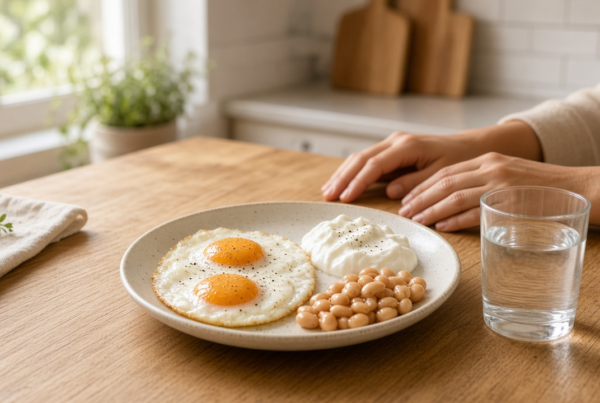
Build the smaller plate around protein first, then add the rest. Eggs, Greek yogurt, cottage cheese, fish, chicken, tofu, beans, a protein shake if solid food is not appealing. You do not need a restaurant menu from this article, and you do not need a calorie cap. You need a habit: protein shows up even when you are not excited about dinner.
If meat sounds heavy, use a smaller portion more often instead of skipping until you are shaky. A planned snack with protein beats grazing on pretzels because they are the only thing that sounds fine. Thursday-level detail, the kind of page that walks through dinners, is a different article. Here the rule is short. Do not let “not hungry” delete the protein.
Strength work is the other half
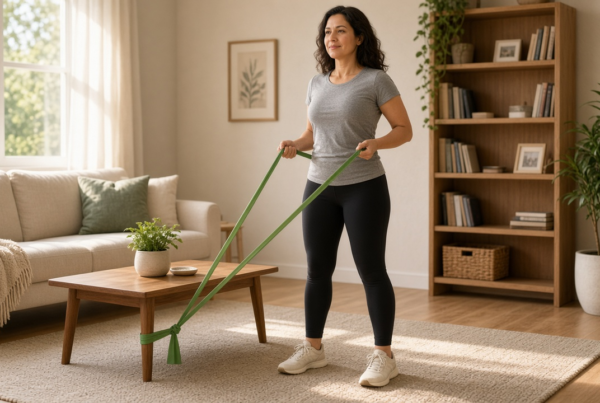
Protein without some kind of strength work is an incomplete answer. Walking still counts for your heart and your mood. It does not, by itself, tell your muscles to stay. Two or three short sessions a week of pushing, pulling, or lifting something challenging is the piece people drop when the scale is moving and they feel done. You do not have to become a gym person. You do have to give the muscle a reason to stick around while the appetite is quiet.
If you already train, do not assume you should stop because you are eating less. Tell your clinician and, if you have one, your trainer that intake dropped. The session may need to be shorter. It should not disappear. Muscle is a separate conversation from this daily-life page, and it deserves its own plan. The only point here is that you should not wait for that plan to start skipping the basics.
This page is not the prescription page
Searches like what to expect on Ozempic or what to expect on Wegovy usually want a tour of the drug: the name, the pen, the dose steps, the comparison chart. That tour already exists in the medication explainer. This article does not repeat it. There is no dose chart here, no “best GLP-1” list, and no prices.
Where to get the medication is also a different question. If you are still looking for a clinician in Texas who prescribes this class of drug, start with GLP-1 providers in Texas. If you are trying to understand what medical weight loss is before you pick a path, what medical weight loss means is the overview. Living on the medication assumes you already have a prescriber and a follow-up. If you do not, the finder is the right door. This page will not pretend to be both.
Side-effect lists online love a single dramatic percentage. You will not get one here. What you can use is plain: some people feel queasy, very full, constipated, or uninterested in food, especially early or after a dose change. Some people mostly notice the quieter hunger and little else. Report what you feel. Do not borrow someone else’s week and decide yours is failing because it does not match a comment section.
When your stomach is the whole day
Fullness that tips into nausea changes the plan for that day. Smaller bites, slower meals, and food that is not greasy often sit better. That is practical, not a treatment. If you cannot keep fluids down, if pain is severe, or if you feel faint, contact your care team or urgent care. Do not wait on a blog to see if it passes while you get more dehydrated.
Constipation shows up often enough to plan for it: fluid, a walk, fiber you can tolerate, and a message to the clinic if it is stuck for days. Do not start a stack of supplements because a video said to. Ask. The same goes for a sudden disinterest in all food that lasts more than a couple of days. A quiet appetite is expected. Aversion that wipes out intake is a follow-up issue.
- Queasy after the dose: smaller, blander meals and a note to your clinician if it keeps you from eating
- Full after a few bites: stop, save the rest, and make sure protein was in those bites
- No interest in food for a day: still get protein in, even if it is a shake
- You cannot keep fluids down, or pain is severe: call the care team or urgent care, do not ride it out from an article
The questions this page will not finish
Daily life on a GLP-1 bumps into four other problems. Each one needs its own time. Naming them here is a map, not the article.
- Food noise, meaning the thoughts, not just the hunger. Quieter is common. How to work with the thoughts that remain is a longer conversation.
- Muscle. Protein plus strength, not protein alone, and not a clinic ranking about “muscle preservation” products.
- What to eat when you are not hungry. Smaller plates that still cover protein. Not a calorie cap and not a restaurant list.
- Stopping. Some people regain weight when the medication stops and appetite returns. What to have in place is a plan you make with your clinician before a stop. This page does not tell you to stop.
If your real question is one of those four, do not force this article to answer it. Use this page to see how the week is supposed to feel, then take the specific question to a visit. The weight loss program is where nutrition, follow-up, and the rest of the plan sit together. A single blog post cannot be the program.
Follow-up, in person or virtual, in Texas
Vitality sees people in person in the Dallas-Fort Worth area and by virtual visit across Texas. There is no city street address hiding in this article. Say whether you want a clinic visit or a virtual one when you book, and say you are already on a GLP-1 so the time is used for the week you are living, not for a first explanation of what the drug class is.
Coverage is not the same on every plan. Participating insurance is the list of plans the clinic works with. It is not a promise that your plan pays, and it is not a quote. Bring your card if you want that checked. Do not skip the visit because a webpage could not tell you your copay.
A useful follow-up is specific. What breakfast looked like on workdays. Whether dinners got skipped. Whether strength work happened. Whether nausea changed what you would eat. Whether the thoughts about food got quieter or only moved to the evening. Bring that, not a perfect food diary. Two true days beat a cleaned-up week.
- Appetite: quieter, gone, or still loud at certain hours
- Meals you actually ate, especially protein
- Strength sessions, or the reason they did not happen
- Nausea, constipation, or dizziness
- Any thought you have had about stopping, so it is a plan and not a surprise
If the week feels worse, not just smaller
A smaller appetite can feel strange. It should not feel like you are disappearing your meals and hoping for the best. Mood changes, a heart racing in a new way, severe abdominal pain, vomiting that will not stop, or signs of dehydration are reasons to contact a clinician promptly. This article cannot tell you which of those is urgent for you. If you are scared, treat it as urgent.
The ordinary hard week is different. You are eating less, your pants fit differently, and you are not sure you are doing it right because nobody handed you a script for Tuesday night. That is the week this page is about. You are not behind because you do not have a color-coded meal plan. You are behind only if the meals, the protein, and the check-ins have quietly stopped.
Bring the real week to a consult
Living on a GLP-1 is a smaller appetite, earlier fullness, and, for many people, fewer thoughts about food. It is also protein, some strength work, and a follow-up that hears what the week was actually like. It is not a dose chart, a price list, or a reason to stop eating.
If you want that week looked at with you, book a weight loss consultation. Tell them you are already on the medication and what has changed since you started. The appointment page is the next step. The article’s job ends at a clear picture, not at a personal plan.
Living on a GLP-1 questions
These are the practical questions people ask once the prescription is already part of the week. They are general education, not a personal plan, a dose change, or a reason to stop a medication on your own.
What does living on a GLP-1 actually change?
For many people the day gets smaller in two ways. Hunger is quieter, and fullness shows up earlier, so plates that used to disappear now get left half finished. Thoughts about food can ease too, though they do not switch off for everyone. What does not change is the need for protein, some strength work, and follow-up. The medication does not build the plate for you, and it does not replace a clinician. If your week does not look like that, say so at the visit. A blog description is a picture of a common pattern, not a score you have to match.
Do I still need to eat if I am not hungry?
Yes. A quiet appetite is not a reason to skip the meal. You can make it smaller. You should not erase it, because that is how protein and fluid disappear and the afternoon gets shaky or irritable. Put protein on the plate first, then stop when you are comfortably full. Save what is left. If solid food sounds awful, a shake or yogurt still counts. Tell your clinician if you are regularly unable to eat, because that is different from choosing a smaller dinner. Not hungry is a signal. It is not permission to run the day on coffee.
Is this the page that explains doses of Ozempic or Wegovy?
No. People search what to expect on Ozempic and what to expect on Wegovy when they want the drug tour: names, pens, and dose steps. That material lives on the medication explainer, and this article does not copy it. There is no dose chart, no price, and no ranking of which GLP-1 is best. If you do not have a prescriber yet, the Texas provider page is the door for that question. This page assumes the medication is already part of your week and answers what the days feel like. Bring dose questions to your own clinician. Do not adjust a dose from a blog.
What should I do if I feel sick to my stomach?
Smaller, blander meals and slower eating are reasonable on a queasy day. Greasy food often sits worse. That is comfort, not a treatment plan. If you cannot keep fluids down, if pain is severe, or if you feel faint, contact your care team or urgent care instead of waiting to see if a post online talks you through it. Constipation is common enough to mention at follow-up rather than stacking supplements from a video. A day of low interest in food can still include a protein shake. Several days of being unable to eat is a message for the clinic, not a sign you are doing the medication correctly.
Will I lose muscle if I am eating less?
You can, if the smaller meals are mostly easy food with little protein and you stop doing anything that challenges your muscles. Weight on the scale does not tell you which tissue you lost. Keep protein in the meals you do eat, and keep some strength work in the week, even if the sessions get shorter. Walking is still worth doing. It is not the whole answer for muscle. This page is not a training plan and it is not a product pitch. If strength is the worry that brought you here, book time to talk about it. Do not wait until stairs feel harder to mention it.
How do I book if I live in Texas?
Vitality sees people in person in Dallas-Fort Worth and by virtual visit across Texas. This article does not list a street address. Use the appointment page and say you are already on a GLP-1 so the visit is about your week, not a first lesson on the drug class. Insurance is not the same on every plan. The participating insurance page shows plans the clinic works with. It is not a promise that yours pays. Bring the real week: appetite, protein, strength sessions, and any nausea. Two honest days are more useful than a diary you cleaned up the night before.