
Hunger getting quiet is the change people hoped for. The next problem shows up at 2 p.m., when you realize you have not eaten and you do not want to. What to eat on a GLP-1 is a smaller plate, on a schedule, with protein first. It is not a restaurant menu, and it is not a calorie cap.
Waiting until you feel hungry can mean skipping the meal. On these medicines, fullness arrives sooner and the usual cues get soft. You still need food. The practical move is to eat smaller meals at times you chose, lead with a protein food, and drink fluids through the day. Eggs, yogurt, fish, tofu, cottage cheese, and beans are the foods that do that job without a spreadsheet.
People also ask how much you should eat on Wegovy. The amount is the plate you can finish, not a number copied from a comment section. If a meal is so large or so fried that you cannot get through it, that is information. It is not a reason to stop eating altogether.
Why “I’ll eat when I’m hungry” stops working
Before the medicine, hunger was loud. It told you when to start. After the medicine, that signal may not show up until you are lightheaded, irritable, or simply done for the day. By then the meal you skipped is gone, and the next one feels impossible too.
A schedule replaces the missing signal. Breakfast, a midday meal, and an evening meal, even when each one is small. A planned snack if the gap between meals is long and you know you fade. You are not forcing a holiday portion. You are refusing to let a quiet appetite turn into a day of coffee.
This is the opposite of a diet that tells you to wait as long as possible. Smaller and earlier beats huge and late. A giant dinner after nothing all day is the plate people most often cannot finish, and it is the one that leaves them nauseated.
Protein first, then the rest of the plate
When you can only eat a little, the order matters. Start with the protein food. Then add a fruit, a vegetable, or a starch you tolerate. If you fill up on bread first, the eggs are still on the plate when you are done, and the muscle-building part of the meal never happened.
How much protein you need is its own article. Your dietitian sets the target for your size and your health. This page will not hand you a gram goal. It will tell you to put a recognizable protein on the plate you do eat.
- Eggs or egg whites, plain or in a small scramble.
- Yogurt or cottage cheese, without turning it into a dessert project.
- Fish, chicken, tofu, or beans, in a portion you can finish.
- A glass of milk or a simple shake if chewing feels like too much, and solid food is not working today.
The 30-30-30 meal plan already owns the breakfast rule people search next to this topic. Use that page for that method. Do not turn this one into a second copy of it. If a breakfast with protein before the rest of your morning helps you, good. The point here is the habit, not a branded sequence.
Meal ideas that stay small on purpose
Ideas, not a menu you must rotate. Pick foods you already buy.
- Eggs and fruit. Stop when you are comfortably full, even if the second egg is still there.
- Yogurt with beans or a few bites of chicken later, if dairy at breakfast is enough and you need a savory protein at lunch.
- Fish or tofu with a cooked vegetable. Skip the oversized fried side that makes the meal feel like a challenge.
- Cottage cheese and fruit in the afternoon if dinner is still hours away and you know you will not want it if you arrive empty.
- A bowl of soup with beans or chicken, if a dry plate sounds awful. Salt and fluids both count.
Fried foods and very large meals are the ones people most often say they cannot finish. You do not need a banned-food list. You need to notice which plates leave you miserable and stop ordering that size. Leftovers are allowed. A meal you eat half of now and half of in three hours is still a meal.
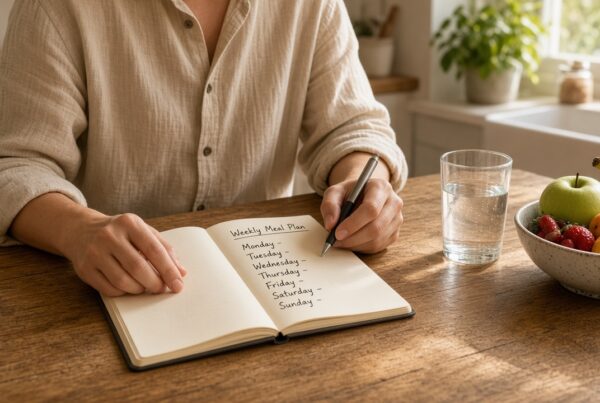
The weekly meal plan is the general planning page. It is where a protein-dinner search has been landing, and it is not written for a quiet appetite on a GLP-1. Use it for structure if you like plans. Use this page for the rule that changes when hunger is soft: schedule, protein first, stop when full, do not skip the day.
Fluids are part of eating
A quiet appetite often comes with quieter thirst. People get headaches, constipation, and dizziness and blame the dose, when part of the day was coffee and nothing else. Sip water through the day. Do not chug a huge glass at the meal if that makes the food impossible. Drink between meals if drinking with food fills you up too fast.
Broth, milk, and yogurt count toward both fluid and food. If water is the only thing you can stand, that is a short-term bridge, not a meal plan. Tell your prescriber if fluids are all you have managed for more than a day.
What “how much” means without a calorie cap
There is no calorie number on this page, and there will not be one. A cap copied from the internet ignores your size, your nausea, and whether you are also trying to keep your strength. Eating under some round number you saw online is how people turn a useful medicine into a day of not eating.
How much is: the portion you can finish without feeling sick, that still includes protein, repeated across the day. If you are regularly leaving every protein untouched and only eating crackers, the portion is not the problem. The pattern is. That is a nutrition visit, not a stricter rule.
Strength work is a different page. Keeping muscle while the scale moves depends on protein and on using the muscle. Keeping muscle on a GLP-1 is that article. This one will not write your workouts. Your visit can hold both.
When nausea is the reason the plate stays full
Mild queasiness that passes if you eat slowly and skip the fried food is common, and smaller meals are the usual fix. Severe nausea, vomiting, or a day where you cannot keep food down is not a willpower issue. Call the prescriber. Do not “push through” a second day of not eating because you are afraid a meal will stall the scale.
- Eat slowly. A rushed plate is harder to finish.
- Room-temperature foods if hot smells turn your stomach.
- Skip the large fried meal instead of skipping all food.
- Separate a big drink from the meal if liquid makes you full immediately.
- Call the prescriber if eating stops for days, or you cannot keep fluids down.
Do not add a stack of supplements because a video said they “support” the medicine. Your clinician should know what you are taking. This page is food, schedule, and when to call. It is not a product list.
What a nutrition visit adds
You can start the schedule and the protein-first plate before anyone sees you. A visit is how the plate gets matched to you: foods you actually like, a stomach that is tricky, a work shift that is not three neat meals, a medical reason your protein target is not the internet’s target.
What to expect from a weight-loss nutritionist covers that hour. Nutritional counseling is the service you book. Bring a normal day of eating, including the meals you skipped. That skipped lunch is the useful data.
If you are in Texas, nutrition visits can be in person or virtual. Coverage depends on the plan. This page will not promise that a visit is paid for, and it will not name a restaurant to copy. The foods above are grocery foods on purpose.
A day that is boring enough to repeat
Morning: a protein food you can finish, even if it is small. Midday: another, before you are empty and miserable. Evening: a third, smaller than your old dinner, stopped when you are full. Water between them. One planned bite of something you like so the day does not feel like punishment.
If a shift worker’s clock is different, move the meals to the hours you are awake. The clock time is less important than the gap. Long empty stretches are the problem. Three small contacts with protein fix more days than one perfect dinner.
You will have a day when none of this sounds good. One off day is not a failure. A string of days with almost no food is a call to the prescriber and a reason to move the nutrition visit up, not a reason to feel ashamed.
Bring the quiet appetite to a visit
You do not have to invent a gourmet plan to eat on a GLP-1. Smaller meals, on purpose, protein first, fluids through the day. That is the whole idea. A nutrition visit turns it into foods you will actually buy.
Say, when you book, that hunger is quiet and you are not sure you are eating enough. That sentence is more useful than a list of foods you think you should want. Schedule a visit and bring yesterday’s meals, including the ones that did not happen.
GLP-1 eating questions
These answers are general education for a quiet appetite, not a personal meal plan. Your clinician and dietitian still set targets and decide what to do if you cannot eat.
What should I eat on a GLP-1 if I am not hungry?
Eat a smaller meal on a schedule instead of waiting for hunger to announce itself. Start with a protein food you recognize, such as eggs, yogurt, cottage cheese, fish, tofu, or beans, then add fruit or a vegetable if you still have room. Stop when you are comfortably full. Skipping until you feel hungry often means the meal never happens. Fluids still count, but water alone is not the meal. If a full-size plate sounds impossible, eat half now and half later. The goal is repeated small contacts with protein, not a perfect menu.
How much should you eat on Wegovy?
There is no calorie number that fits everyone, and this page will not invent one. How much means the portion you can finish without feeling sick, with protein included, more than once in the day. A very large or fried meal is the portion people most often cannot finish. That is a reason to make the next meal smaller, not a reason to eat nothing. If you are leaving every protein food untouched and living on crackers, the pattern needs a nutrition visit. Your size, your nausea, and your other health conditions change the amount. A copied cap will not.
Do I need a gram target for protein?
Not from this article. A dietitian or clinician should set the protein amount for your body and your medical history. A number copied from a social post can be too high or too low for you. Until that visit, put a real protein food on the meals you do eat, and eat it before the bread or the snack. The protein article on this site explains why the nutrient matters. The breakfast method people search as a numbered routine already has its own page. Use those. Do not turn a blog into a personal prescription.
What if fried or heavy meals make me feel sick?
That reaction is common, and it is useful information. Choose a smaller, simpler plate next time: eggs, yogurt, fish, tofu, beans, or soup, instead of a large fried dinner. You do not need a long banned-food list. Notice which meals you cannot finish and stop serving yourself that size. Eat slowly, and drink most of your water between meals if drinking with food fills you up immediately. One uncomfortable dinner is not an emergency. Vomiting, or more than a day when you cannot keep food down, is a reason to call the prescriber rather than to tighten the rules.
Can I skip breakfast if I have no appetite?
You can move the clock if your shift is unusual, but a long empty stretch is the problem this page is trying to prevent. Quiet appetite is not the same as a body that needs no food. A small protein food in the morning, even if it is not a traditional breakfast, keeps the day from becoming coffee until dinner. Dinner is then the meal you cannot finish. If mornings are truly impossible, eat the protein food at the first break you can protect, and do not stack the whole day onto one late plate. Tell your nutrition visit which hours you are actually awake and working.
When should I call the prescriber about eating?
Call if you cannot keep fluids down, if eating has basically stopped for days, or if nausea and vomiting are severe. That is a medical problem, not a discipline problem. Do not wait for a nutrition appointment to mention that you are only drinking water. A quieter appetite and smaller meals are expected. Dizziness, a headache from not drinking, or constipation from a day with almost no food still belong in the conversation, and the severe version belongs on the phone sooner. Bring yesterday’s intake, including the skipped meals, so the advice is about your day and not a generic list.