
If you searched weight gain after stopping Wegovy, you are probably worried the scale will climb once the medication is gone. Appetite and the constant thoughts about food often come back when a GLP-1 stops, and regain is common. It is not automatic, and it is not a character flaw. This page is the plan to have ready. It is not a reason to stop, and it does not include a taper or a dose.
Stopping is a decision you make with the clinician who prescribed the medicine. If you are thinking about a stop because of side effects, cost, a supply gap, or a goal you already hit, bring that question to a visit. Do not use an article as the stop date.
What usually changes when the medication stops
GLP-1 medicines quiet appetite for a lot of people. Meals get smaller without a fight. The mental pull toward food, the one people call food noise, gets quieter. When the medicine is no longer there, those signals often return. Hunger can feel louder than it did before you started, even if your habits got better while you were on it. That rebound is biology. It is not proof that you failed the program.
Clinic explainers from places like Cleveland Clinic and Mayo Clinic Press say the same practical thing: appetite returns, regain is common, and a plan beats an abrupt stop. They do not hand you a personal forecast, and this page will not invent one. A percentage in a headline is not a measurement of your body.
Stopping Ozempic weight gain is the same worry under a different brand name. The useful question is identical. What will hunger do, and what is already in place before that happens. Wegovy and Ozempic are not instructions on this page. They are the words people type when they are scared of the week after.
Regain is common, and it is not everyone
The search “does everyone gain the weight back” wants a yes or no. The honest answer is that not everyone does, and it is common enough that you should plan for it. People who already have a protein habit, some strength work, and a follow-up on the calendar have more to stand on than people who stop on a Friday and hope Monday feels the same.
Regain is also not all or nothing. Some weight coming back is not the same as landing where you started. The point of a maintenance plan is to notice the change while a meal pattern can still be adjusted, instead of waiting until the old clothes are tight and the shame is doing the talking.
Shame makes the next step worse. It pushes people to hide the scale, skip the visit, or start a harsh diet that they cannot keep once hunger is loud. A follow-up is a better use of that week than a private restart.
What to have in place before a stop is even a conversation
Build these while you are still on the medicine. They are harder to invent in the week hunger returns.
A protein habit you already repeat
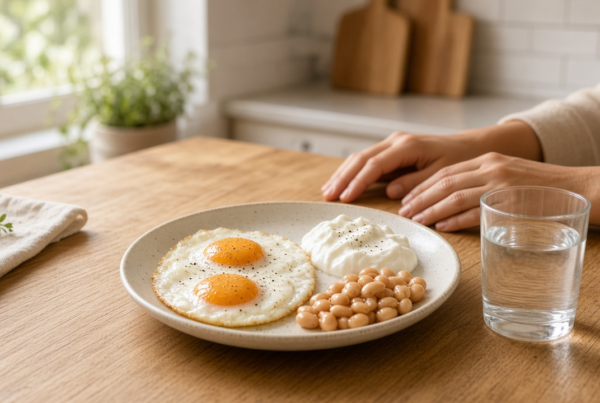
On a GLP-1, a small plate can still cover protein if you put it there on purpose. That habit is the one to keep when portions grow. Eggs, Greek yogurt, chicken, fish, tofu, cottage cheese, or beans at the meals you actually eat. You do not need a perfect gram target from a blog. You need a default you will still choose when you are hungry again. If appetite is low right now, the eating-on-a-GLP-1 page is about the smaller plate. This page is about what you keep when the plate gets easier to fill.
Strength work you will still do
Muscle is part of why maintenance feels less fragile. Walking counts. So do two short strength sessions you do not dread. The point is not a new gym plan the week you stop. The point is a session that already lives on your calendar, so you are not inventing exercise and meals in the same week hunger gets louder. If a session takes forty minutes and you skip it whenever life gets busy, it is not the session. Pick the twenty minutes you have actually done.
A follow-up that is already booked
Book the next visit before any stop, not after the scale moves. In Texas that visit can be in person or virtual. You say what hunger is doing, what you are eating, and whether the plan needs a change. An article cannot see your labs, your prescription, or your week. The weight loss program is where nutrition, movement, and that follow-up sit together.
Hunger and food noise when the medicine is gone
Food noise is the mental pull toward food that is hard to turn down. It often gets quieter on a GLP-1 and busier again after a stop. The food noise page is the longer piece on what helps while you are still taking the medicine. Here the point is shorter. Expect the thoughts to get louder, and have a response that is not white-knuckling every evening.
- Eat the protein default before you are overly hungry
- Keep the same meal times for a few weeks so the day has edges
- Name one situation that used to drive extra eating, and say it at the follow-up
- Do not treat one loud week as proof the whole loss is gone
Emotional eating can return with the hunger. Evenings, stress, and the drive home are the usual times. That is a reason to use the care team, not a reason to decide alone that the medication stopped working or that you should quit it tonight. If those evenings were hard before the medicine, they may be hard again. Planning the evening is more useful than promising yourself you will be stricter.
A stall while you are still taking it is a different question
If the scale has stalled and you are still on the medicine, that is a plateau, not a stop. The plateau page is the one to read. Do not treat a flat few weeks as a sign to discontinue. A stall while the prescription is active needs a look at intake, training, sleep, and a dose conversation that belongs with your clinician. This page does not have that conversation, and it will not suggest stretching the time between doses.
People mix the two questions because both feel like “it is not working.” A plateau is about a stall during treatment. This article is about what happens if treatment ends. Read the one that matches the week you are actually in.
How to keep weight off after a GLP-1
Keeping weight off is a practice, not a trick and not a new diet name. Three moves matter more than a headline.
- Keep protein at the meals you already eat, even when portions grow
- Keep the strength session or the walks that were already happening
- Add food back on purpose if intake had gotten very low, instead of swinging from tiny meals to old portions over a weekend
That third point is where reverse dieting fits, and only in this sentence. Reverse dieting is the page about eating more after a long deficit. Reverse dieting after a plateau is the version tied to a stall. Use those if the question is how to add food without a rebound. Do not turn this article into a calorie ladder. A ladder without your current intake is a guess, and a guess is how people overshoot.
Sleep and a regular schedule make hunger feel less chaotic. They do not replace the follow-up. Weekends, alcohol, and restaurant meals are the usual places portions jump. Plan one of those on purpose. A planned dinner out is easier to absorb than three unplanned ones you then try to “undo” on Monday.
What this page will not tell you
- No taper schedule and no dose
- No instruction to stop, pause, or space out injections
- No pound target and no percent of people who regain
- No microdosing plan
- No promise that habits alone will hold every pound
If a headline quoted a regain statistic, leave it there. Your plan is the habits and the appointment, not a number that was not measured on you. Comparing your week to a stranger’s chart is how a normal hunger rebound turns into a panic diet.
Plan the maintenance visit before you need it
Bring the question you actually have. You are thinking about a future stop. Hunger is already louder. Or you want a maintenance plan while you are still on the medicine. Say which one, and say whether you can be seen in person or virtually. The appointment page is the booking path.
If you are having severe symptoms you think are from the medicine, contact the prescribing clinician or urgent care. Do not wait on a blog to sort that out. If you are doing well and you are simply afraid of later, that fear is a good reason to book. It is not a reason to stop this week.
Stopping a GLP-1 questions
These answers are general education. They are not a taper, a dose, or a personal decision to stop. Talk with the clinician who prescribed the medicine before you change it.
Does everyone gain weight back after stopping Wegovy?
Not everyone, and it is common enough to plan for. Appetite often returns when the medicine stops, and with it the portions that used to stay small without much effort. Some people hold most of the loss. Some regain part of it. A headline percentage is not your forecast, and this page will not give you one. What changes the week is specific: a protein habit you already use, strength work or walking you already do, and a follow-up on the calendar before any stop. Stopping is a clinician decision. Do not pick a stop date from an article because you are afraid of the scale.
Why does hunger come back?
GLP-1 medicines quiet appetite and, for a lot of people, the constant thoughts about food. When the medicine is gone, those signals often return, sometimes louder than they felt before you started. That is a rebound in hunger cues, not proof you failed. Clinic explainers describe the same pattern: appetite comes back, and an abrupt stop is harder than a planned one. This page still will not tell you how to taper or what dose to use. If hunger is already loud while you are taking the medicine, that is a visit, not a reason to discontinue on your own.
Should I stop if the scale has stalled?
A stall while you are still taking the medicine is a plateau, not a stop. Read the plateau page for that question, and talk with the clinician who prescribed it before you change anything. Flat weeks can come from intake that got very low, less movement, poor sleep, or a dose conversation that is not this article’s job. Discontinuing because a month looked flat can land you in rebound hunger without a plan. Book the follow-up, describe the stall, and let that visit decide. Do not space out injections because a blog made it sound reasonable.
What should be in place before a stop?
Three things, already happening, not promised for later. A protein choice at the meals you actually eat. A short strength session or a walk that is already on your week. A follow-up visit booked before the stop, in person or virtual in Texas. Those are easier to keep than to invent in the week hunger returns. Bring a medicine list and a plain description of what you eat on a normal day. The visit can adjust the plan. An article cannot see your labs or your prescription, and it should not be the thing that picks the date.
Is regain the same as going back to the start?
No. Some weight coming back is not the same as landing where you began, and treating it that way makes people hide the scale or start a harsh diet they cannot keep. The useful move is to notice the change while meals can still be adjusted. Keep the protein default, keep the session you already do, and tell the care team what hunger is doing. Shame is a poor plan. A booked visit is a better one. If clothes feel different, say that in plain words at the appointment instead of waiting for a number that scares you.
How is this different from a plateau or from food noise?
A plateau is a stall while you are still on the medicine. Food noise is the mental pull toward food, including while you are taking a GLP-1. This page is only about what often happens if treatment ends: appetite returns, regain is common, and it is not automatic. Use the other pages for those questions. Use this one to get a maintenance plan ready, and do not stop because you read it. If you are doing well and you are afraid of later, book the visit and say that. Fear is a reason to plan. It is not a reason to quit this week.