Strength training on a GLP-1 is a short session you can repeat when your energy is low, not a new identity as someone who lives in the gym. Two days a week is enough to start. Walking still counts on the other days. The care team sets the load. A session without enough food, and food without the session, are both incomplete.
If you want the reason muscle can drop while the scale moves, read muscle loss on a GLP-1 first. That page owns the why. This page is the week of training. It will not promise that muscle will be spared, and it will not hand you a heavy-lifting rule if you are new to this.
What the week is actually for
Appetite is often quieter on these medicines. Meals get smaller. Some people feel tired in the first months, or they feel fine until they try to work out the way they used to. The useful question is not “what is the perfect program.” It is “what can I still do on a week when dinner is half a plate.”
Strength work gives the muscles a reason to stay. It does not cancel the medicine, and it does not replace the eating side. Tuesday’s grocery conversation is a different article. Here, the point is the session itself: a few patterns, a load you can control, and a plan to stop if the session feels wrong.
Researchers and clinic programs often pair a couple of strength days with a lower volume when energy drops. That is the shape of this page. It is not a copied 6-week calendar, and it is not a minute quota for the week.
Two days, not a personality change
Pick two days you can protect. Leave at least one day between them. If Monday and Thursday work, use those. If only Saturday and Sunday are realistic, that is still two days. How often you should work out covers frequency in general. On a GLP-1, start at the low end of what that page describes and let the team raise it.
Each day can be short. A session you finish is worth more than a long plan you skip because you felt queasy after lunch. If you only have twenty minutes, use them. If you have forty and you feel steady, you can stay. Do not add a third hard day in the first couple of weeks just because a chart online said three is better.
Four patterns, used as examples
A simple session rotates four patterns. These are examples, not a required exercise list and not a rep scheme.
- Squat: sit to a chair and stand back up, or a squat you already know.
- Push: a wall push-up or a push-up from a counter if the floor is too much.
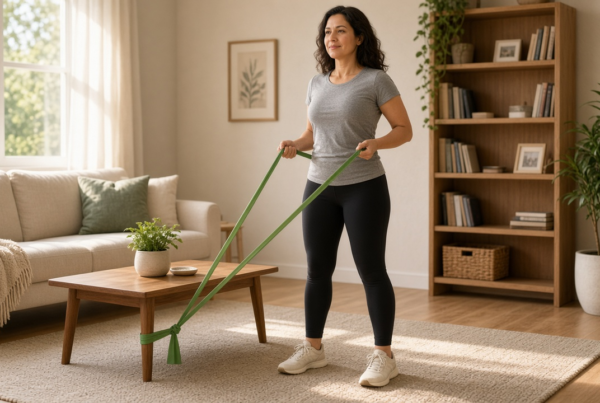
- Pull: a band pull or a row if you have a band or a machine you trust.
- Hinge: a hip hinge, like sending your hips back to pick up a light object with a flat back.
Do a few unhurried sets of each. Stop a set when your form gets sloppy, not when a number on a screen says you should. A trainer can put names and loads on these patterns. This article will not.
When energy is low
Some days the medicine, a small lunch, or a poor night makes the session feel heavier than it looks. Shrink the day instead of canceling the habit. Keep the same four patterns. Use a lighter load, fewer sets, or a slower pace. Take a longer rest if you feel lightheaded when you stand up.
Walking is still part of the week. A GLP-1 does not turn walks into a waste of time. If strength is the thing that will not happen today, take the walk and put the strength day on the next open day. Skipping both, every week, is the pattern that leaves the muscle post’s warning unaddressed.
- Keep the two days on the calendar even if one of them becomes shorter.
- Sit down if you feel dizzy. Do not “push through” a spin.
- Eat something you can tolerate before or after the session if you have been skipping meals. The team can help you choose what that is.
- If you cannot keep food down, do not treat a workout as the priority. Call the prescriber.
No weights is still strength work
You can do strength training without weights. A band or your body weight is enough to start the squat, push, pull, and hinge patterns. That sentence is the whole answer to the no-weights search. The next step is a person who can watch the movement. A personal trainer for weight loss is how the load gets chosen, including the choice to stay with a band.
If you want that help near you in Texas, a trainer near you is the local page. Training can also be at home, with virtual follow-up across the state. Do not invent a gym address from this article. The clinic does not need you to buy a rack before the first session.
A fasted morning workout is a different question
Some people like to train before breakfast. On a GLP-1, that can line up with nausea, a very small dinner the night before, or a morning when food does not sound possible. That timing question already lives on the intermittent fasting workout schedule. Leave it there. This page does not tell you to train fasted, and it does not tell you that fasted is unsafe for every person. If mornings are when you feel the worst, move the session later and say so at your visit.
Food and the session are a pair
Protein matters, and the grocery list is not this article. You do not need a gram target from a blog to start two strength days. You do need to be able to eat something on those days. If appetite is so quiet that training days and rest days look the same, empty, bring that to the visit. The muscle page explains why the combination matters. The care team decides what “enough” means for you.
What this page will not tell you to do
It will not say beginners should lift heavy. Heavy is a word that gets people hurt when nobody has watched their hinge or their squat. Start where you can keep the pattern clean.
It will not give you a 12 to 15 rep recipe, a single named workout, a weekly minute goal, or a six-week calendar. Those plans rank well because they look complete. They do not know your nausea, your knees, or your medicines.
It will not promise you will keep every pound of muscle. Strength work is one of the tools. Sleep, food you can finish, and the medicine plan are the others. The result shows up over months, not after one good Tuesday.
It will not name a dose or tell you to change one. Workout advice is not a prescribing page. If the medicine is the reason you cannot eat, that call goes to the prescriber, not to a harder workout.
When to stop the session
Stop if you feel chest pain, if you might faint, if you cannot catch your breath in a way that is new, or if a joint pain is sharp rather than the ordinary work of a muscle. Sit or lie down. If those symptoms do not settle, seek urgent care. Do not finish the set first.
Also stop if the session feels “off” in a way you cannot name: sudden weakness, confusion, or vomiting. Call the prescriber if eating has stopped, even if the workout itself felt fine yesterday. A training plan assumes you are still able to take in food and fluids. When that stops, the plan pauses.
- Pain that is sharp, or on one side of a joint
- Dizziness that does not clear when you sit
- A day when you have not been able to eat or drink
- Any symptom your prescriber already told you to report
What the visit is for
Bring the two days you think you can keep, and say what equipment you actually have. A band in a drawer counts. A gym you will not drive to does not. The trainer or clinician sets the load and the range of motion. You leave with patterns you can repeat on a low-energy day, not with a performance goal.
Say if you are also walking, and how nausea lines up with the time of day. That is more useful than a screenshot of someone else’s program. If you are comparing resistance training on Ozempic or a workout on Wegovy with what friends are doing, bring the question. The shape of the week is similar across these medicines. The dose and the side effects are not a group project.
In clinic, at home, or virtual
Texas patients use this clinic in person and by virtual follow-up. A home session with a band is a real start. An in-clinic session is better if you want someone to correct the hinge before it becomes a backache. You do not have to choose forever on day one. You do have to pick a first week you will actually do.
Schedule the consultation
If you want two strength days that fit a smaller appetite, schedule a weight loss consultation. Mention that muscle and training are the reason you booked, and bring the muscle page’s question with you: what should the week look like while the scale is moving.
You will not get a copied workout poster. You should get a load, a stop rule, and a food check so the session is not the only plan. Walking can stay. The grocery details can wait for their own visit. The first win is two days you repeat.
GLP-1 strength training questions
These are the questions patients ask before they book. They are not personal medical advice. If eating has stopped or a session felt unsafe, call the prescriber or seek urgent care.
How many days a week should strength training on a GLP-1 be?
Two days a week is the start this page recommends. Leave a day between them if you can. Each session can be short. A finished twenty-minute session beats a long plan you skip because you felt queasy.
Do not add a third hard day in the first couple of weeks just because another plan said three. Walking still belongs on the other days. If one strength day has to shrink, keep it on the calendar as a shorter session instead of deleting the habit. The care team can raise the week later. They should see how you recover first.
Do I need to lift heavy to protect muscle?
No. This page will not give beginners a heavy-lifting rule. Heavy is how people get hurt when nobody has watched their squat or their hinge. Start with a load you can move while the pattern stays clean. That might be a chair, a band, or a light dumbbell.
A trainer sets the load. The article will not. Strength work is one tool beside food you can finish, sleep, and the medicine plan. It does not come with a promise that every pound of muscle stays. The result, if it comes, shows up over months.
Can I do this without weights?
Yes. A band or your body weight can cover a squat, a push, a pull, and a hinge. That is enough to start. You do not need a rack or a gym membership before the first week.
The next step is still a person who can watch the movement, because a band used with a slumped back is not a better plan than no band. Training can be at home or in clinic, with virtual follow-up across Texas. Pick the version you will actually repeat. Do not buy equipment to delay the first session.
What if I feel too sick to work out?
Shrink the day or move it. Keep the same patterns with less load, or take a walk and put strength on the next open day. Sit down if you feel dizzy. Do not push through a spin.
If you cannot keep food or fluids down, the workout is not the priority. Call the prescriber. A training plan assumes you can still eat and drink. When that stops, the plan pauses. Stop the session for chest pain, fainting, new severe breathlessness, or sharp joint pain, and seek urgent care if those do not settle.
Should I train before breakfast on a GLP-1?
That is a separate question, and it already lives on the intermittent fasting workout page. This article does not tell you to train fasted, and it does not say fasted is unsafe for every person. Mornings are often when nausea or a tiny dinner from the night before shows up.
If that is your pattern, move the session later and mention it at the visit. Eat something you can tolerate around the session if you have been skipping meals. The team can help you choose what that is. Do not copy a fasted calendar from a fitness site.
Will two strength days stop muscle loss?
Nobody honest can promise that. Muscle can drop while weight drops, which is why the muscle-loss page exists. Two strength days give the muscles a reason to work while appetite is quiet.
They do not replace food, and they do not replace a follow-up with the care team. Protein belongs in the week, and the grocery list is a different visit. Bring both questions: what the session should look like, and whether you are able to eat enough to support it. The scale moving is not the only number that matters.